
The Basics of Food Combining
The goal of proper food combining, and of eating for that matter, is to make energy available. We need to limit the spoiling or fermentation of the foods we eat so that our organs won’t be impeded in their operations by un-eliminated, toxic metabolic waste, which is the major cause of overweight, illness and aging. To digest efficiently, we must pay attention to which foods are combined at a meal, especially breakfast, and to how much time elapses between meals.
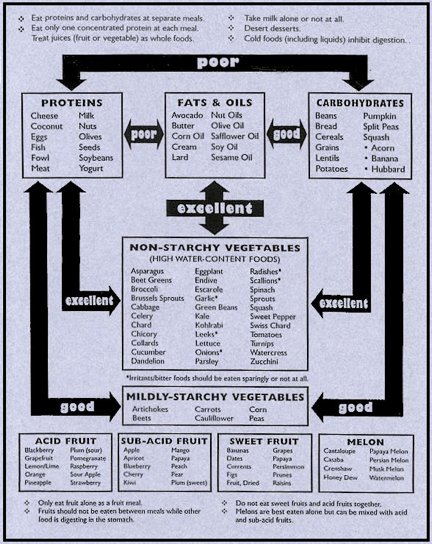
Most of us eat starch and protein at every meal. This causes digestive juices to neutralize each other. We dilute the enzymes needed for digestion by drinking beverages with the meal. And we top it all off with a fruit or sugar-containing dessert which ferments everything we just ate. A meal like this becomes barely usable if at all, and the body then uses an enormous amount of energy to complete a massive cleanup and elimination of these ruined contents from its digestive system.
When it comes to food combining, there are many different opinions. Edgar Cayce said in a number of readings not to have citrus fruits with cereal, and not to have starch and protein in the same meal. Popular nutritionist Gary Null doesn’t adhere to food combining; He readily adds nuts and raisins into hot cereal recipes. Macrobiotics have a diet of grains (mostly brown rice), cooked vegetables and fish, all of which they will combine in one meal. They don’t have fruit unless cooked, and eat few raw foods. “Natural hygienists” are vegan, so no animal products are included in their diet. They don’t eat much grain, absolutely no refined foods including bread, and raw food is the rule—as a group, they are generally very slender.
Food needs vary, and digestive systems and metabolic rates are different, so for some, certain foods/combinations may never be eaten (some cannot eat apples, or nuts or beans even if they are soaked), yet at other times the same individuals have no reaction to these foods. Loosely based on natural hygiene, the general rules of proper food combining discussed by Harvey and Marilyn Diamond in their book, Fit For Life, are comprehensive, and have worked well for many. You can use all or some of the following to enhance your health:
(1) Eat fruit alone. Acid (citrus), sub-acid (apples, peaches, etc.) and sweet fruits (banana, dried fruits, etc.) should not be combined as they have different digestive times: Acid 15-20 minutes; sub-acid 30 minutes; sweet 1 hour, melon 1 hour. Sprouted or soaked nuts and seeds are pre-digested, and may be eaten with fruit for some individuals; avocado combines well with acid (includes tomatoes) and sub-acid fruits. These additions will increase digestion time. Melon should be eaten alone, and different melons should not be combined.
(2) Eat protein and starch at separate meals. Protein uses stomach acid for digestion and starch needs alkaline digestive enzymes. This means the standard dishes of steak and potatoes, meatballs and spaghetti, fish and rice are not good combinations. Rice and beans are permitted, however, because beans have a natural combination of both starch and protein. However, beans are notoriously difficult to digest. When protein and starch are eaten at the same meal the digestive enzymes neutralize each other, and it could take 8-12 hours to clean out the toxic undigested food, which may eventually be converted to fat and remain stored in fat cells.
(3) Eat only 1 concentrated food at a meal. This means either steak or potatoes, meatballs or spaghetti, cheese or bread, and have vegetables and/or salad with it. Two proteins should never be eaten together as the body will need different sets of amino acids to break them down, using a lot of energy. Two starches may be eaten together, however, because they are easier to digest, although 1 starch is better. Diamond says the myth of needing animal protein is a hard one to dispel... that the amino acids in vegetables and fruits are more abundant than those in animal products and easier to assimilate, that we stress ourselves eating far too much protein, and that we have an amino acid pool from which the body takes whatever additional aminos are needed. The protein myth is perpetuated by exceedingly powerful meat and dairy lobbies.
(4) Have a diet of at least 70% water-laden foods, 30% concentrated. Our bodies function more efficiently with a continual supply of water, so fruits and vegetables should make up the largest part of our diet. No practice will expedite the elimination cycle more than the regular and adequate consumption of high water content food. Cayce said have a big salad for lunch, or a smaller salad with both lunch and dinner. The concentrated food should be as a side dish, so a small piece of meat with plenty of vegetables and salad, or a dish of pasta and vegetables, where 70% is vegetables, 30% pasta.
(5) Drink liquid 15 minutes before or 2 hours after a meal, unless it is a nutritional part of the meal, like a green vegetable juice, otherwise it dilutes and washes out digestive enzymes. Be sure coffee or tea are plain if you must drink them with or near a meal, or use liquid stevia, an herbal sweetener, which has no affect on digestion.
(6) Eat only fruit until noon. The reason for this is that there are 3 natural body cycles: noon - 8pm for appropriation (eating and digestion); 8pm - 4am for assimilation (absorption and use); and 4am to noon for elimination (of body wastes and food debris). If you begin eating while your body is eliminating, it will stop and store the toxins in your cells. If you eat only fruit, you will not interfere with this cycle, in fact you will promote it. This is especially important if you’ve combined incorrectly the day before or eaten too late. In the beginning when you adopt this diet, there’s a chance you may have gas or other symptoms. It is because your body is detoxifying. This can happen after a fruit breakfast, which by its nature is a detox. Chris D’Orta, Cayce educator, says if you must eat more substantially, have a Knox unsweetened gelatin fruit salad (Cayce said gelatin makes foods more digestible and assimilable), or yogurt or kefir (both of which are semi-digested) with fruit, or a protein drink with one of various green powders and a banana or other fruit. A tablespoon of flaxseed oil will slow digestion of these meals further and still allow them to do more good than other breakfasts would.
(7) Time required after eating other food before you can eat fruit or another meal: 2 hours after salad or raw vegetables; 3 hours after a well-combined meal without animal products, 4 hours after a properly combined meal with animal products; 8-12 hours after any improperly combined meal or where you have eaten too much food and/or drink.
If you aren’t active, you may need more time between meals. Listen to your body. You know when something you ate wasn’t right and there’s burping, gurgling stomach, gas, heartburn, reflux, you feel tired, you’re gaining weight or getting sick. I have noticed this winter - probably due to not exercising as much as at other times of the year - my digestion is slower, so I have to leave more time between meals, and eat less. Food combining fails most often when we don’t eat enough at a meal and you are hungry and don’t know what to eat. If this happens, stall your eating with water or tea or eat something that combines well with the previous meal.
For a food combining chart please send a self-addressed, stamped envelope to Carol Schneider, 242 E. 80th Street, NYC 10021,
The goal of proper food combining, and of eating for that matter, is to make energy available. We need to limit the spoiling or fermentation of the foods we eat so that our organs won't be impeded in their operations by un-eliminated, toxic metabolic waste, which is the major cause of overweight, illness and aging. To digest efficiently, we must pay attention to which foods are combined at a meal, especially breakfast, and to how much time elapses between meals.
Most of us eat starch and protein at every meal. This causes digestive juices to neutralize each other. We dilute the enzymes needed for digestion by drinking beverages with the meal. And we top it all off with a fruit or sugar-containing dessert which ferments everything we just ate. A meal like this becomes barely usable if at all, and the body then uses an enormous amount of energy to complete a massive cleanup and elimination of these ruined contents from its digestive system.
When it comes to food combining, there are many different opinions. Edgar Cayce said in a number of readings not to have citrus fruits with cereal, and not to have starch and protein in the same meal. Popular nutritionist Gary Null doesn't adhere to food combining; He readily adds nuts and raisins into hot cereal recipes. Macrobiotics have a diet of grains (mostly brown rice), cooked vegetables and fish, all of which they will combine in one meal. They don't have fruit unless cooked, and eat few raw foods. "Natural hygienists" are vegan, so no animal products are included in their diet. They don't eat much grain, absolutely no refined foods including bread, and raw food is the rule—as a group, they are generally very slender.
Food needs vary, and digestive systems and metabolic rates are different, so for some, certain foods/combinations may never be eaten (some cannot eat apples, or nuts or beans even if they are soaked), yet at other times the same individuals have no reaction to these foods. Loosely based on natural hygiene, the general rules of proper food combining discussed by Harvey and Marilyn Diamond in their book, Fit For Life, are comprehensive, and have worked well for many. You can use all or some of the following to enhance your health:
(1) Eat fruit alone. Acid (citrus), sub-acid (apples, peaches, etc.) and sweet fruits (banana, dried fruits, etc.) should not be combined as they have different digestive times: Acid 15-20 minutes; sub-acid 30 minutes; sweet 1 hour, melon 1 hour. Sprouted or soaked nuts and seeds are pre-digested, and may be eaten with fruit for some individuals; avocado combines well with acid (includes tomatoes) and sub-acid fruits. These additions will increase digestion time. Melon should be eaten alone, and different melons should not be combined.
(2) Eat protein and starch at separate meals. Protein uses stomach acid for digestion and starch needs alkaline digestive enzymes. This means the standard dishes of steak and potatoes, meatballs and spaghetti, fish and rice are not good combinations. Rice and beans are permitted, however, because beans have a natural combination of both starch and protein. However, beans are notoriously difficult to digest. When protein and starch are eaten at the same meal the digestive enzymes neutralize each other, and it could take 8-12 hours to clean out the toxic undigested food, which may eventually be converted to fat and remain stored in fat cells.
(3) Eat only 1 concentrated food at a meal. This means either steak or potatoes, meatballs or spaghetti, cheese or bread, and have vegetables and/or salad with it. Two proteins should never be eaten together as the body will need different sets of amino acids to break them down, using a lot of energy. Two starches may be eaten together, however, because they are easier to digest, although 1 starch is better. Diamond says the myth of needing animal protein is a hard one to dispel... that the amino acids in vegetables and fruits are more abundant than those in animal products and easier to assimilate, that we stress ourselves eating far too much protein, and that we have an amino acid pool from which the body takes whatever additional aminos are needed. The protein myth is perpetuated by exceedingly powerful meat and dairy lobbies.
(4) Have a diet of at least 70% water-laden foods, 30% concentrated. Our bodies function more efficiently with a continual supply of water, so fruits and vegetables should make up the largest part of our diet. No practice will expedite the elimination cycle more than the regular and adequate consumption of high water content food. Cayce said have a big salad for lunch, or a smaller salad with both lunch and dinner. The concentrated food should be as a side dish, so a small piece of meat with plenty of vegetables and salad, or a dish of pasta and vegetables, where 70% is vegetables, 30% pasta.
(5) Drink liquid 15 minutes before or 2 hours after a meal, unless it is a nutritional part of the meal, like a green vegetable juice, otherwise it dilutes and washes out digestive enzymes. Be sure coffee or tea are plain if you must drink them with or near a meal, or use liquid stevia, an herbal sweetener, which has no affect on digestion.
(6) Eat only fruit until noon. The reason for this is that there are 3 natural body cycles: noon - 8pm for appropriation (eating and digestion); 8pm - 4am for assimilation (absorption and use); and 4am to noon for elimination (of body wastes and food debris). If you begin eating while your body is eliminating, it will stop and store the toxins in your cells. If you eat only fruit, you will not interfere with this cycle, in fact you will promote it. This is especially important if you've combined incorrectly the day before or eaten too late. In the beginning when you adopt this diet, there's a chance you may have gas or other symptoms. It is because your body is detoxifying. This can happen after a fruit breakfast, which by its nature is a detox. Chris D'Orta, Cayce educator, says if you must eat more substantially, have a Knox unsweetened gelatin fruit salad (Cayce said gelatin makes foods more digestible and assimilable), or yogurt or kefir (both of which are semi-digested) with fruit, or a protein drink with one of various green powders and a banana or other fruit. A tablespoon of flaxseed oil will slow digestion of these meals further and still allow them to do more good than other breakfasts would.
(7) Time required after eating other food before you can eat fruit or another meal: 2 hours after salad or raw vegetables; 3 hours after a well-combined meal without animal products, 4 hours after a properly combined meal with animal products; 8-12 hours after any improperly combined meal or where you have eaten too much food and/or drink.
If you aren't active, you may need more time between meals. Listen to your body. You know when something you ate wasn't right and there's burping, gurgling stomach, gas, heartburn, reflux, you feel tired, you're gaining weight or getting sick. I have noticed this winter - probably due to not exercising as much as at other times of the year - my digestion is slower, so I have to leave more time between meals, and eat less. Food combining fails most often when we don't eat enough at a meal and you are hungry and don't know what to eat. If this happens, stall your eating with water or tea or eat something that combines well with the previous meal.
For a food combining chart please send a self-addressed, stamped envelope to Carol Schneider, 242 E. 80th Street, NYC 10021,
A More Radical – Yet Simple Approach to Food Combining
An Easier Way to Have Better Digestion by Frederic Patenaude
You might disagree, but hear me out on this. I think one of the best ways to improve your digestion is to follow some very simple food combining rules. One question I get a lot is, “When you eat raw foods, do you have to avoid certain combinations?” The answer is yes. But then, it doesn’t have to be complicated. I will show you some very simple ways you can use food combining to your advantage, and I will also list some food combinations that are perfectly fine, although many people still shun them. Sugar and Fat The main combination to avoid is sugar and fat. Sugar being any type of sugar such as fruits, dates, refined sugar, or anything sweet. Fat includes oils, avocados, nuts, and any other type of fatty foods. The reason is that fat takes a longer time to digest, while sugar tends to digest quickly. When the two are mixed together in sufficient quantities, the sugar will ferment. Say hello to gas and bloating! So the combinations to avoid include: dates and nuts, nuts and dried fruits, adding fat to fruit smoothies (including oils, nuts, etc.), and obviously eating fruit or sweets at the end of a meal. However, let me also say that although this is the most important rule to follow, it is not completely rigid either. A little occasional combo of fruit and fat are okay, but generally, you’ll find that avoiding this combination most of the time will solve a lot of your digestive problems.
Sugar and Starch Another very bad combo is the combination of cooked starch and sugar, so this one obviously doesn’t apply to a raw food meal. Starch includes bread, potatoes, pasta, etc. This combinations leads to a lot of gas and fermentation. Examples include: raisin bread, all pastries, all cakes, all cookies, and eating sweets after a meal! Concentrated Foods You can understand the philosophy and science of food combining by understanding one simple idea: it’s best to eat only one type of concentrated food at a meal. Concentrated foods include anything that’s not a fresh fruit or vegetables, or anything that’s high in fat. For example, bread, meat, potatoes, nuts, seeds, avocados. The reason is that concentrated foods take more time to digest, and when they are mixed together, they tend to conflict with each other and cause digestive problems. So the idea is in one meal to have just one type of concentrated food, and accompany that with lots of vegetables. It’s also best to eat fruits alone. Unnecessary Rules There are several “rules” of food combining that are really not necessary. Once you become more fluent in the “language” of food combining, you’ll understand why. Let me give you a few: Melons - There’s no reason not to mix melons with other fruits. You can mix melons with any other fruit you want, without any problems. Just don’t mix them with concentrated foods. Fruits - Fruits may be combined with each other without problems. There’s no need to divide them in categories of their own. The only exception is the banana, which should not be mixed with very acid fruits such as oranges. The reason is that bananas contain starch and this conflicts with the acidity in certain fruits. Tomatoes - Although we eat tomatoes as a vegetable, it is a fruit in reality so it may be combined with other fruits if desired. Greens Don’t Count - Greens such as lettuce, celery, spinach, and other green leaves, don’t even count in food combining. The reason is that they combine well with anything. They combine well with fruit as well as with any other food.
Simplify Combos So those were a few tips to help you improve your diet and get you started with some food combining concepts. The whole idea about food combining is to simplify meals. It means that a meal with 5 ingredients will digest more easily than a meal with 10. And a meal with 2 ingredients will be easier to digest than a meal with 5. It’s more important to vary our diet from meal to meal, rather than get all that variety in one meal! As you learn more about food combining and a simple and easy raw food diet, you’ll find that it’s really the best way to stay healthy with a “silent” digestion, and best of all, it’s also so enjoyable to eat that way!
“Frederic Patenaude, is the author of the best-selling e-book “The Raw Secrets”. He is currently giving away fr’ee access to his private library of over 100 exclusive articles along with a subscription to his newsletter Pure Health & Nutrition. Visit http://www.fredericpatenaude.com while charter subscriptions last.
Excerpt from “Food Combining Hanbook” by Gary Null & staff.....Jove Publications 1973 copyright....also see http://www.garynull.com/
Phenol, indole, and skatol, [poisonous by-products of intestinal putrefaction] upon absorption, are combined in part with sulphuric acid and excreted in the urine. These poisons have long been found in the urine and the amount contained therein has been taken by some scientists as an indication or index to the extent of putrefaction that is going on in the intestine. Because the body establishes some toleration for these poisons, as it does for other habitual poisons, it does not mean that the organism itself has adjusted to neutralize these products of bacterial activity. Certainly the discomfort arising from the accumulation of abdominal gas, the bad breath emanating from the gastrointestinal fermentation and putrefaction, the foul odor from the stools or from expelled gases, are as unappreciated as the poisons. It is possible to possess clean breath, odorless stools and freedom from the pressures of gas. Anything that decreases digestive potency, delays the process of digestion or momentarily halts the digestive procedure will favor bacterial activity. We have already discussed some of the causes of digestive insufficiency and failure-they are legion.
Certainly, one of the most common causes of digestive inefficiency is eating improper food combinations. Ignoring enzyme limitations and eating carelessly is greatly responsible for a large amount of the indigestion which almost everyone experiences. The proof of this lies in the fact that feeding correct combinations results in the end of indigestion. However, do not be misled by this statement. Feeding correct combinations will only improve and not end digestive upheavals if the indigestion is due in part to other causes. For example,- if worry is an eminent factor in the cause, it will have to be got rid of before digestion can be orderly and more typical. Millions of dollars are spent each year for remedies which can afford a temporary respite from the discomfort and distress resulting from putrefaction in the gastrointestinal tract. Substances to neutralize acidity, absorb gas and relieve pain are employed in huge quantities by people. Normal healthy digestion is not accompanied by any symptoms of disease. Heartburn, gastritis, the ulcer -a symbol of status in American business and not-so-business life-are hardly healthy gastrointestinal situations.